婉君
US urging China and others to back Iran sanctions an attempt to ‘shift blame for own failed pressure campaign’_我的网站

一 | 有个网友爆料,自家领导天天给他发消息的时候,压根不喊名字,就喊他的ID。视频加载中...什么“题目仔,去我电动车后面黑袋里拿一下会议本”,还有“题目仔,慰问品收齐了没?”这领导的脑回路,真是绝了!本以为这是个例,结果点开评论区,简直让我笑晕在厕所之前改了微信名,老板拿着手机跑到办公室说乌克丽丽你把我微信删了吗,我怎么搜不到你?我微信也叫赵团子,我的顾客,同事,亲戚都叫我赵团子,但是赵团子是我狗的名字我以前网名叫爽子大王。

二 |
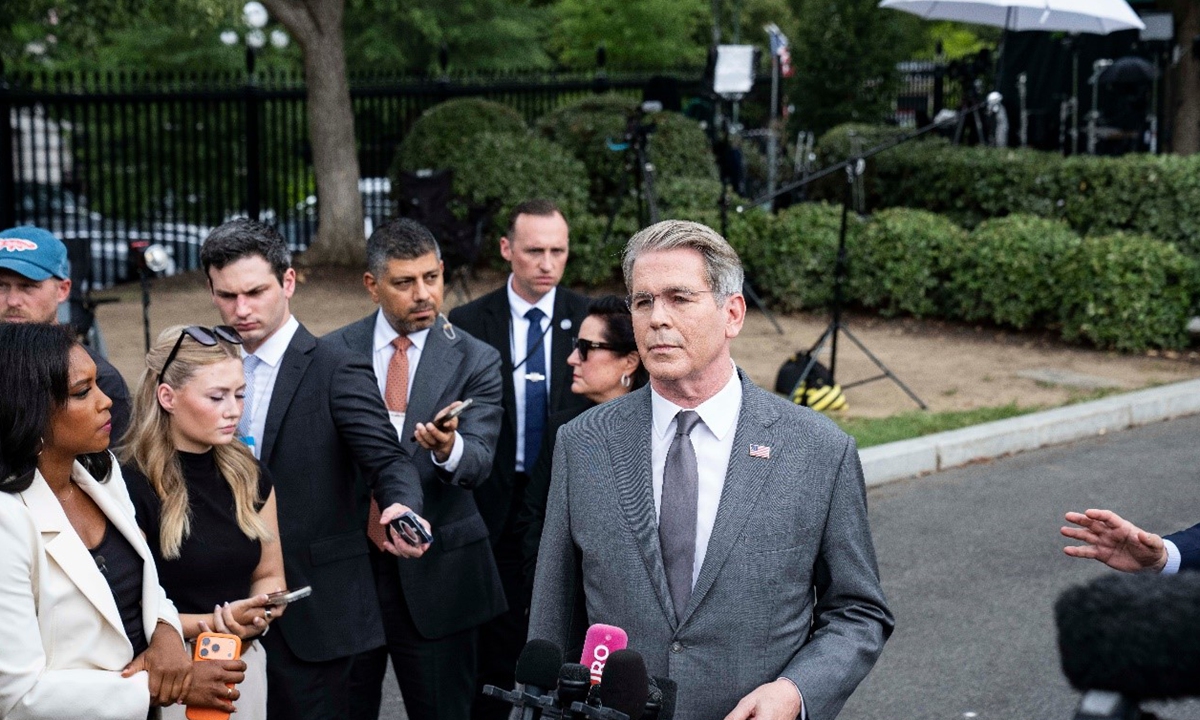
US Secretary of the Treasury Scott Bessent speaks to the media outside the West Wing of the White House in Washington, DC, US, on August 20 2026. Photo: VCG
US Treasury Secretary Scott Bessent's latest remarks that Washington will impose "the toughest sanctions in history" on Iran while urging China to cooperate reflect an attempt to shift responsibility for the prolonged Iran war and the failure of US pressure tactics. By trying to drag China into the discussion, Washington is essentially resorting to the ploy of "making others take medicine for one's own illness." This amounts to the US' making excuses for its own erroneous policy toward Iran, said Chinese experts.
China opposes illicit unilateral sanctions that lack basis in international law and UN Security Council mandate, Lin Jian, spokesperson of the Chinese Foreign Ministry said on Friday in response to Bessent's remarks, calling on parties to act responsibly and stick to the political and diplomatic approach.
"We have the blockade (on Iran), and we are going to have the toughest sanctions in history," Bessent told CNBC. Bessent said he would hold a press conference on Monday to discuss details, according to a Reuters report.
When asked if the US could target China for doing business with Iran, Bessent said many conversations were best to have in private. "We are confident that everyone wants the Strait (of Hormuz) reopened, and for energy prices to come back down," he said, per Reuters.
Bessent's comments on Thursday followed US President Donald Trump's threat a day earlier of "Economic Warfare" and warning of economic consequences against any country that provided "any type of lifeline to Iran," according to Reuters.
The US appears to have reached an impasse with Iran, caught in a dilemma in which it can neither secure a military victory, reach a political settlement, nor easily disengage. Against this backdrop, Washington is seeking to intensify economic pressure on Tehran to force concessions, while also directing pressure toward China. At its core, this approach amounts to waging an economic cold war against Iran in an attempt to compel Tehran to alter its existing policies, Sun Degang, director of the Center for Middle Eastern Studies at Fudan University, told the Global Times on Friday.
Amid declining domestic support for the US' current policy on Iran, Bessent sought to shift blame onto others, a clear case of buck-passing. By blaming normal trade between Iran and countries such as China and Russia for the prolonged Iran crisis and the failure of Washington's pressure campaign on Iran, the US is "asking others to take medicine for its own illness." The root cause lies in Washington's own confrontational policy toward Iran, said the expert.
At a press conference of the Chinese Foreign Ministry on Thursday, a Bloomberg reporter asked: "US President Donald Trump has announced plans to inflict what he calls an 'economic D-Day' on Iran, including threats against Iran's trading partners. Given that China buys a large amount of Iranian oil, does the Foreign Ministry have any comment on this approach of economic warfare that Trump is threatening and how it might affect China?"
Spokesperson Lin said that sanctions and pressure tactics are not the solution. China calls on all parties to act responsibly and remain committed to a political and diplomatic approach.
Iranian Foreign Minister Abbas Araghchi described the US move as a "diversion from America's own crisis: unprecedented debt & surging interest costs." "Doubling down on failed policies will only bring further defeat - and enmity of Iranians. US economic terrorism threatens global economy and sovereignty worldwide," Araghchi wrote on X on Thursday morning.
The US has sanctioned Iran for decades without achieving its desired results. During the maximum economic pressure campaign launched in 2018, Iran suffered a severe economic downturn, yet Washington failed to force Tehran into major concessions. A new round of tougher sanctions could further strain Iran's economy and disrupt trade with regional partners, but is unlikely to trigger an immediate collapse, Tian Wenlin, a professor at the Renmin University of China's School of International Studies, told the Global Times.
Washington also appears to be taking a dual-track approach toward China: seeking to use China's economic leverage over Tehran while threatening Chinese companies that continue normal trade with Iran, said the expert.
Washington's shift from military options to economic pressure may signal limited de-escalation, but the broader US-Iran rivalry could settle into a prolonged, low-intensity standoff. Persistent tensions around the Strait of Hormuz would keep global energy markets under pressure, fueling inflation and weighing on global growth, said the expert.
Oil prices rose to more than a three-week high on Thursday following those US threats of financial penalties aimed at forcing an end to a nearly six-month-old war that has stranded millions of barrels of Middle Eastern oil, according to a Reuters report on Friday.
。我的领导天天喊我大王……后来变成了习惯,所有人都喊我大王,虽然但是也有点敬畏感我微信名叫郑大钱,出去看现场人家叫我郑工,但是我姓罗,而且我是女生,估计人家都会觉得很奇怪一个女生为什么要叫郑大钱大家有被领导这么叫过吗欢迎在评论区留言讨论!。
Current article:http://apvy.diapoqiechuangpenghua.sbs/news/20260826_5165.html
Published on:10:15:54
 Redmi G Pro游戏本2022酷睿版开售,最高12代i9+RTX3070Ti_新机_性能
 《黑神话:钟馗》最新实机花絮来了!国产顶级工作室助力
 Iran Blasts Israel Ahead of Biden Trip, Suggests ‘Arab NATO’ Initiative Doomed to Fail
 주병기 공정위원장 "쿠팡 조사 거부, 형사 고발할 것... 모든 수단 동원"
 京多安:我们必须获得欧冠资格 英超是毫无疑问的世界最顶级联赛
 【快乐·学生】荣光三十竞技场 松柏少年显锋芒 ——厦门市松柏小学第二十届田径运动会
 “韩沛颖说刘浩存14岁就跟某某某导了”上热搜,演员韩沛颖道歉:直播中情绪上头措辞欠妥,导致刘浩存女士被误解,对此深感自责
 李蓓“等风来”


